White Label Local On-Page SEO
Stop turning down local SEO work because your team is short on time. Add a complete local on-page SEO service under your brand. We handle keyword mapping, title tags, meta descriptions, headers, footers, and website-to-GBP alignment. You review everything before it reaches your client. Take on more local clients, keep full control, and scale your agency with 6 years of white label SEO experience for UK agencies
White Label Local On-Page SEO Services
Local on-page SEO is different from general on-page SEO. A page needs to rank for the right keyword while also showing Google that the business serves a specific location. We map local keywords to the right pages based on the towns, cities, and service areas the client covers. We optimise title tags and meta descriptions with relevant keywords and locations, then review the header and footer to make sure the logo, navigation, phone number, CTA, and NAP details support local search.
We also align the website with the client’s Google Business Profile, keeping categories, services, business details, and NAP information consistent. Existing content is improved with natural local context without keyword stuffing, while internal links connect relevant service and location pages. Where appropriate, we also add LocalBusiness schema with details such as the business address, service area, and opening hours.
Local Keyword Mapping
Local keyword mapping starts by understanding search intent and separating local searches from broader, general searches. This helps us decide which keywords should support local service and location pages, and which are better suited to informational content.
Local keywords:
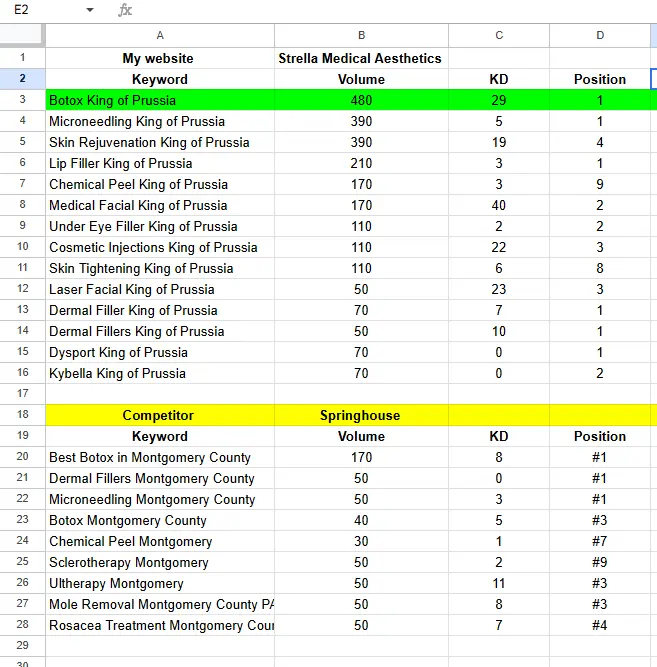
Local keywords show that someone is looking for a business, service, or solution in a specific area. They can include a location or other signals of local intent, such as “plumber near me,” “plumber in Manchester,” “emergency electrician,” or “best med spa in Bristol.” We map these keywords to the most relevant service and location pages based on the areas the client serves.
General Keywords
General keywords do not have a clear local intent. They are often broader or informational searches, such as “how to unclog a drain,” “types of Botox treatments,” or “best sofa fabrics.” These keywords can still be valuable for organic traffic and topical authority, but they should not automatically be used as targets for local service or location pages.
Service & Location Page Optimisation
Service pages and location pages do different jobs, and treating them the same is where most local SEO falls apart.
A service page explains what the business does and targets intent around that service, such as “emergency plumbing” or “emergency plumber near me.” A location page targets a specific town or city, such as “Emergency Plumber in Manchester,” and needs to say something real about serving that area rather than repeating the service page with a new town name swapped in.
We keep the two distinct: service pages carry the depth on what’s offered, location pages carry the local proof and context. This avoids duplicate content between pages and gives each one a clear reason to rank.
Local Title Tags & Meta Descriptions
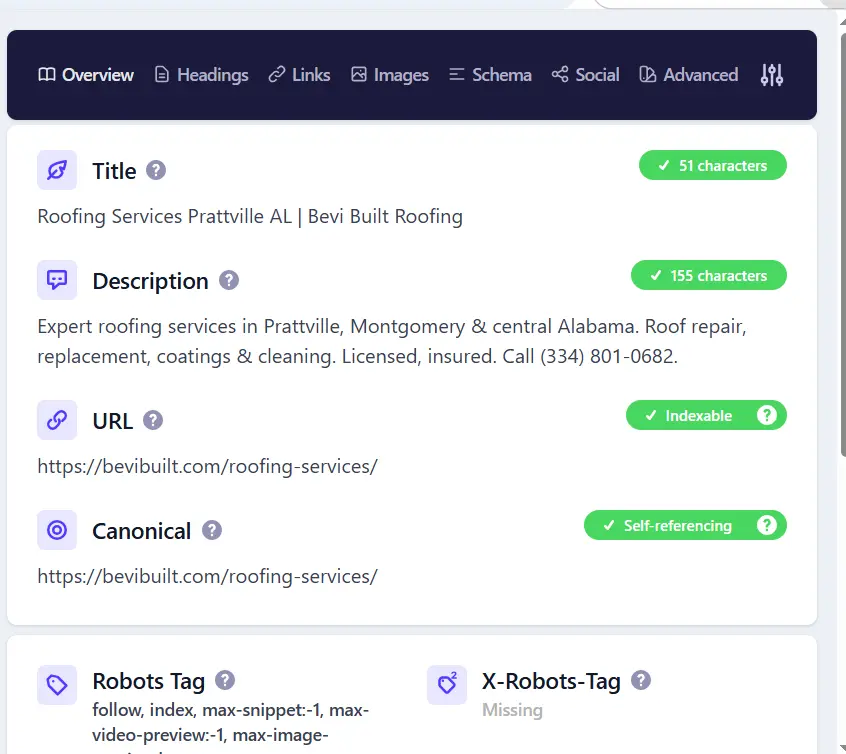
A title tag has two jobs at once: it needs the keyword to rank, and it needs the location to match local search behaviour. We rewrite both to do that without reading like a stuffed keyword string.
Title tags
We lead with the service, then the location, then the brand. This keeps the important terms near the front, where they carry the most weight and get seen first in search results.
Meta descriptions
We use the space to name the service area and give a reason to click, such as a guarantee, response time, or call-out offer, rather than restating the title tag in different words.
Local Header Optimisation
Your website header is an important part of the local customer journey. It should quickly show visitors who the business is, what it offers, and where it serves while making it easy to take action. We review the key elements below.
Logo and Business Name
We use the client’s real business name and link the logo to the homepage. We never add keywords to the business name just to target rankings. For example “ABC Roofing” is better than “Roofing Contractor London ABC Roofing.”
Header Navigation
We keep the main navigation clear and focused on important service and location pages. A roofing company might use Home, Roofing Services, Roof Repair, Roof Replacement, Commercial Roofing, About, Service Areas, and Contact.
Location Signal
Where relevant, we add a short, natural service-area statement such as “Serving Greater Manchester & the North West.” This helps visitors understand
the business coverage without keyword stuffing.
Phone Number
We make the business phone number easy to find and clickable with a tel: link. We also check that it matches the number used on the client’s Google Business Profile and key citations. Different numbers should only be used where a proper call-tracking setup is in place.
Call to Action
We use one clear CTA that matches the business and encourages action. Options such as “Get a Free Estimate,” “Book an Appointment,” “Request Service,” or “Schedule a Consultation” are more specific than a generic
“Contact Us.”
Address
A full address does not usually need to take up space in the main navigation. For a single-location business, a short address in the header or top bar can work. For businesses with multiple locations, we keep the header clean and give each location its own dedicated page.
Local Footer Optimisation
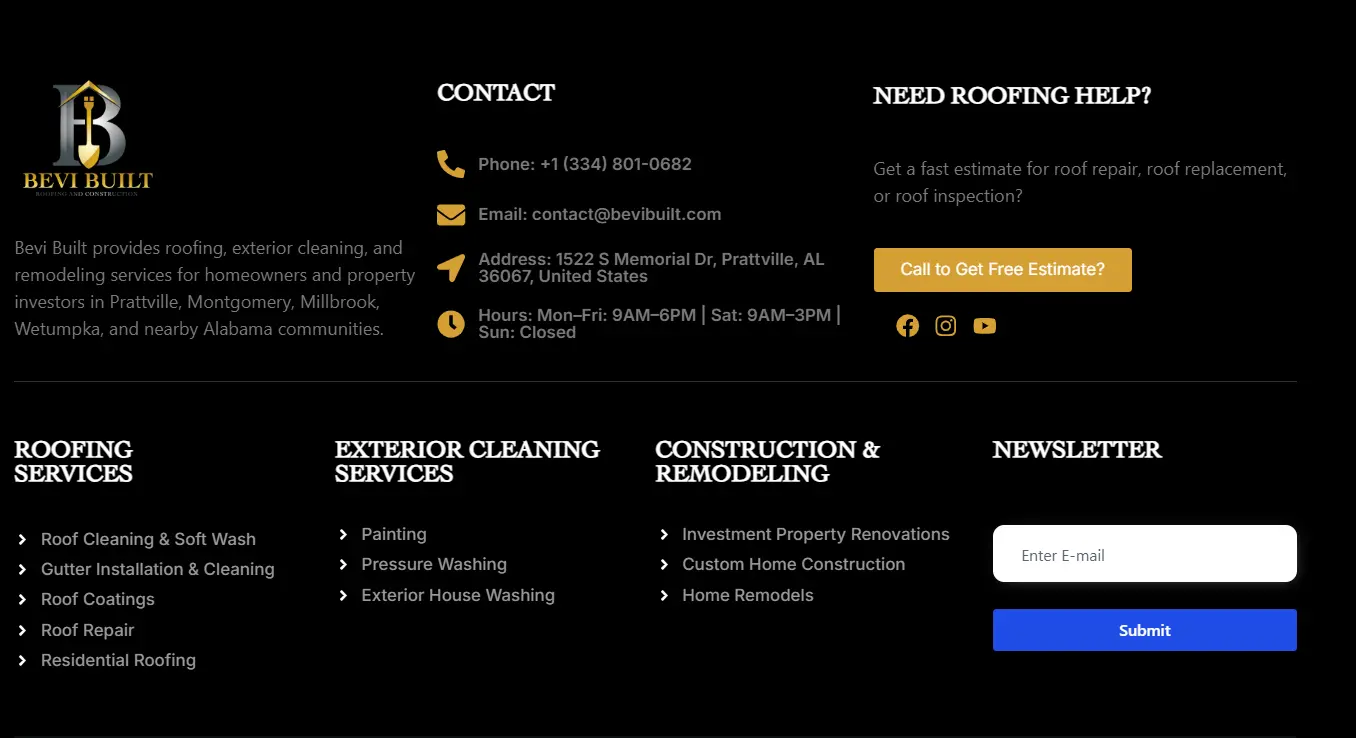
The footer is an important part of a local business website and should reinforce key business information without looking cluttered. We check that the Name, Address, and Phone number (NAP) are accurate and consistent with the client’s Google Business Profile and key citations.
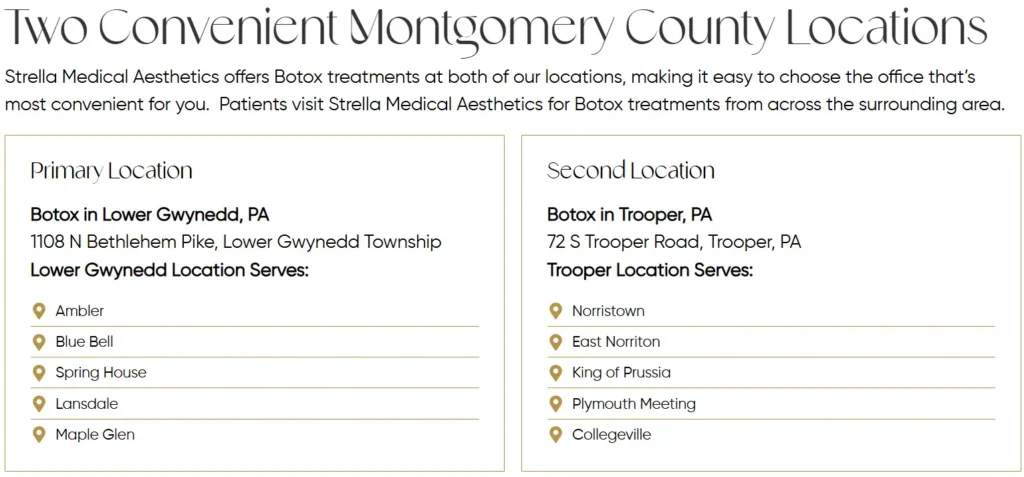
For businesses serving multiple locations, we also review the footer links to make sure important service-area pages are easy to reach. Each location link should point to the relevant location page rather than sending every visitor to a single contact page. This keeps the site structure clear and supports a consistent local SEO strategy.
Mobile & Local Search Experience
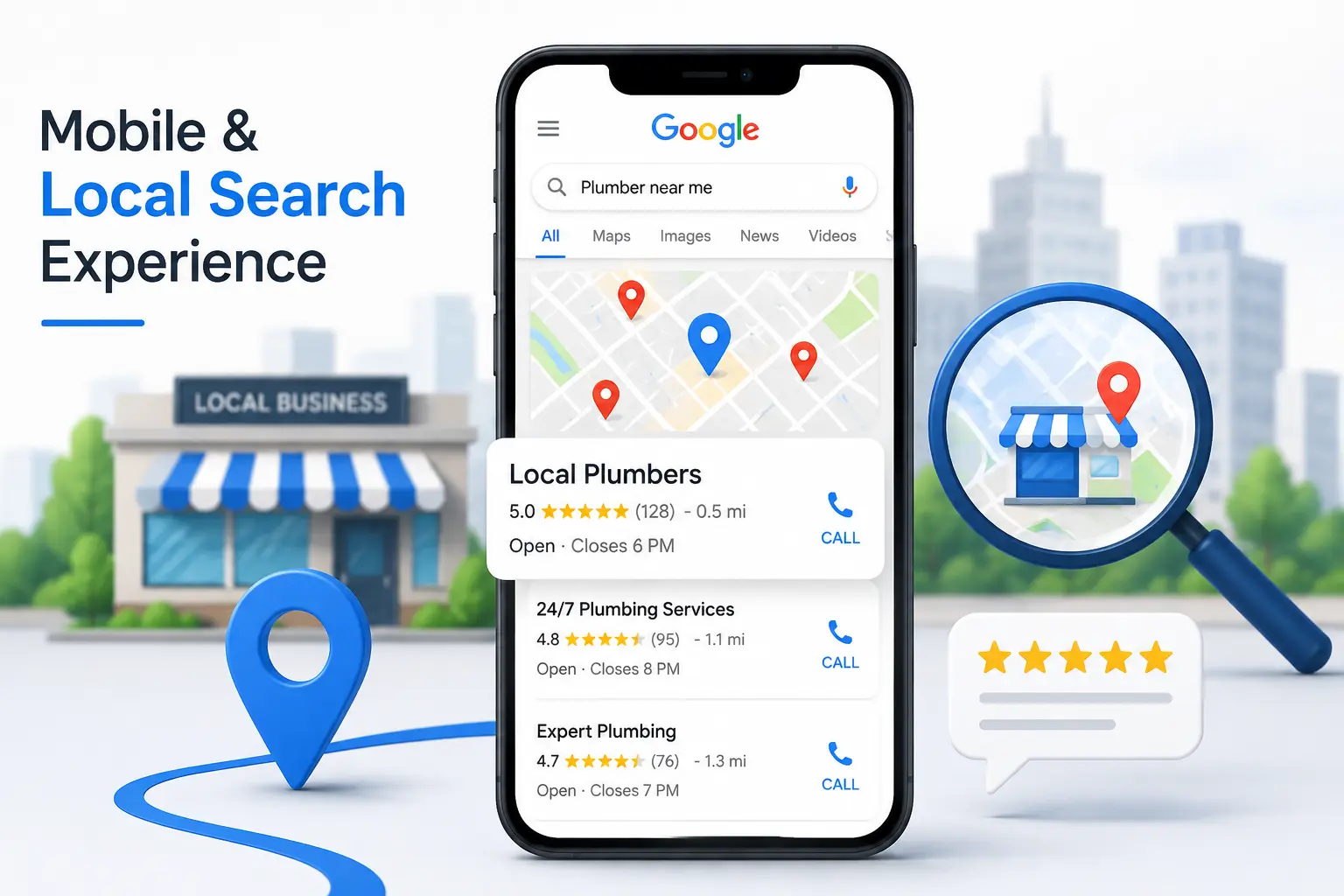
Most local searches happen on a phone, often from someone ready to call or book right away. We check that the mobile experience supports that intent: click-to-call numbers, a CTA that’s visible without scrolling, and clear paths to service and location information.
A page can be fully optimised for keywords and still lose the customer if the phone number isn’t tappable or the layout buries the contact details below three scrolls of content.
Website-to-GBP Alignment
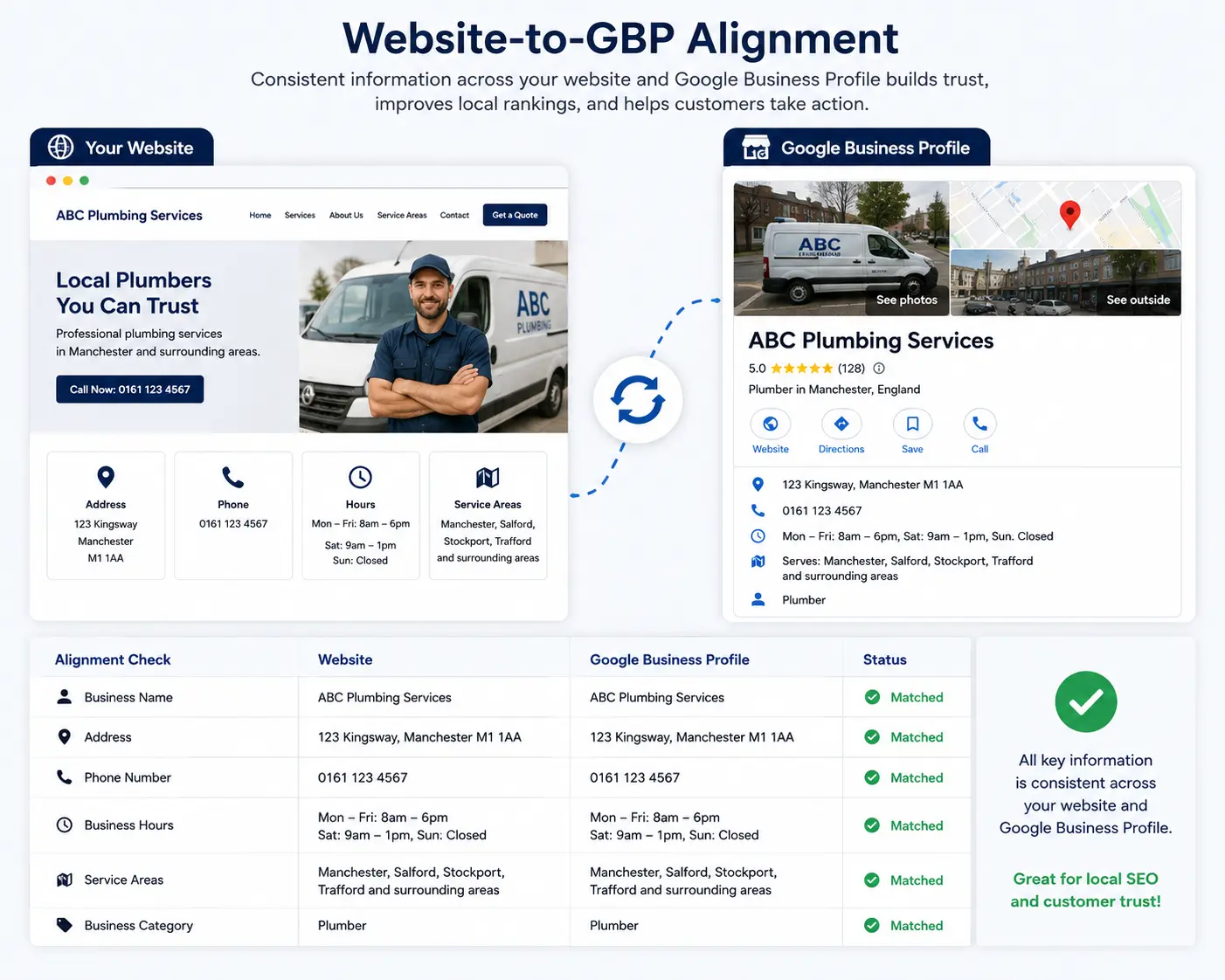
Your client’s website and Google Business Profile should provide Google with consistent information about the business, its services, and the areas it serves. We check that the GBP categories match the services offered on the website, NAP details are consistent across the website, footer, and GBP, and GBP services align with the relevant service pages.
We also review service areas against the website’s location pages to keep the local strategy consistent.
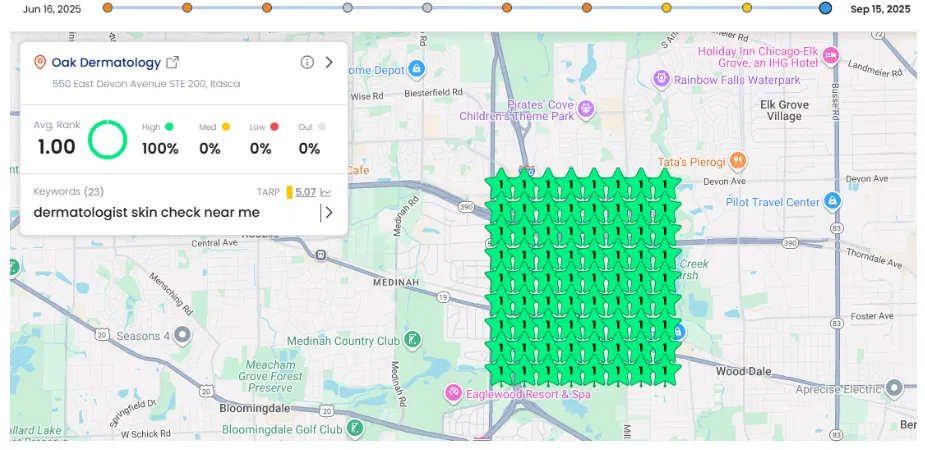
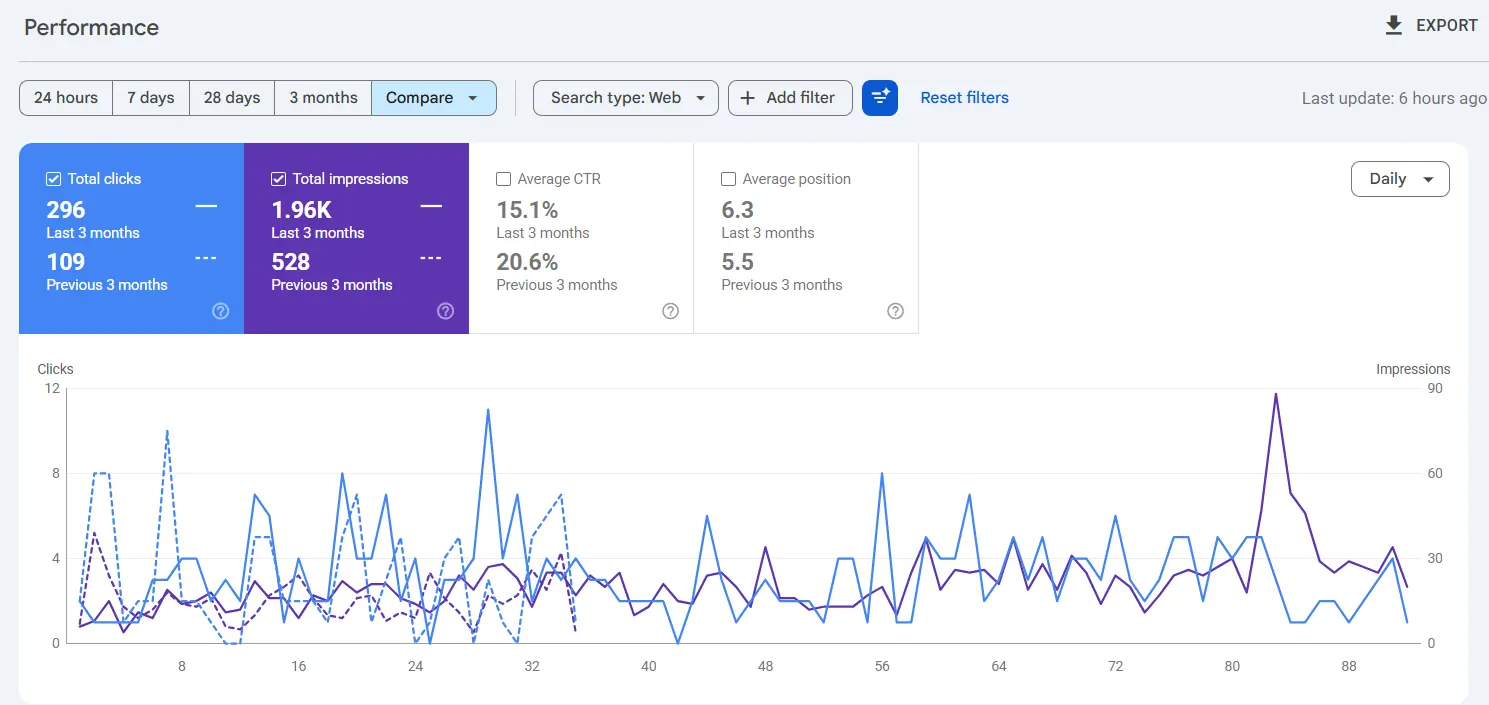
We use BrightLocal to review NAP consistency across the website and citations, and Local Falcon to understand how the client’s local rankings perform across different areas.
Local Schema Markup
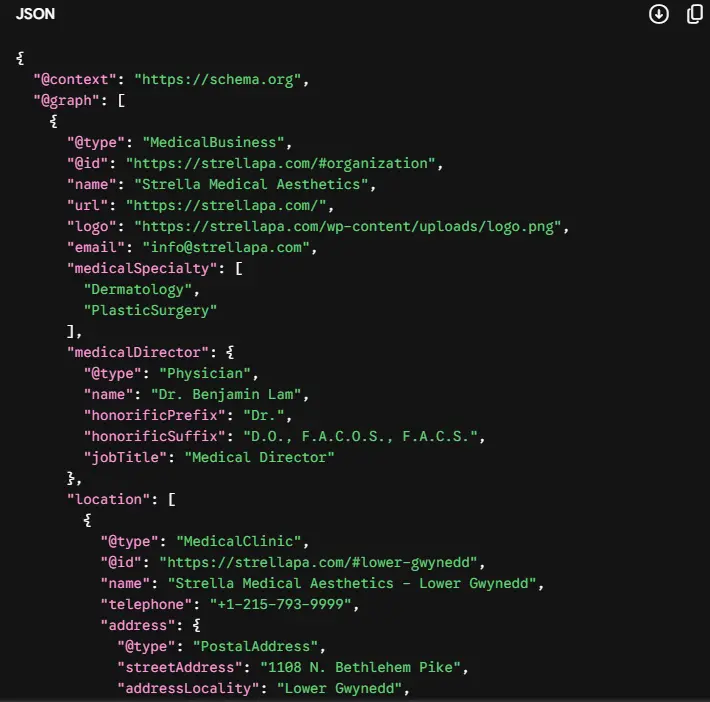
We add relevant LocalBusiness schema markup to help search engines better understand your client’s business, services, and locations. This can include key details such as the business name, address, phone number, service area, and opening hours.
For businesses with multiple locations, we use location-specific schema where appropriate, matching each page with the correct business details and location. We avoid using the same generic schema across every page when more specific markup is available.
Where eligible and supported by the page content, we also use relevant Review or FAQ schema to help search engines understand genuine reviews and frequently asked questions. We only add structured data that accurately reflects the visible content on the page.
Local On-Page SEO Audits
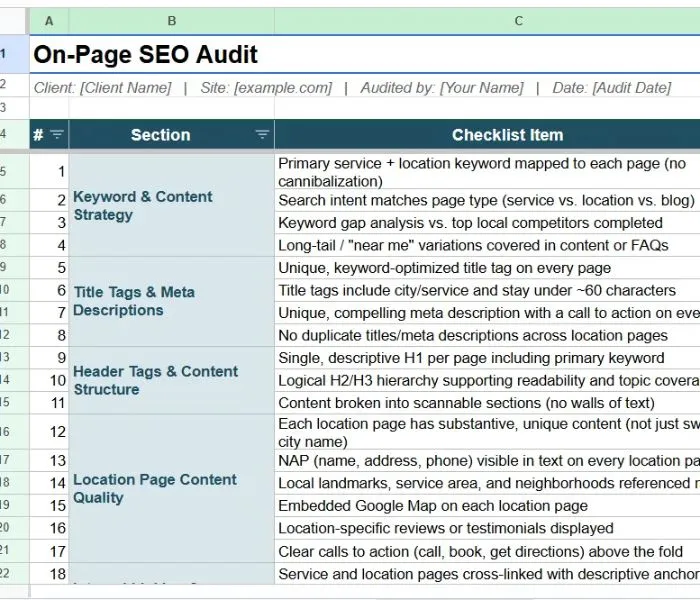
Before we start any work, we review the client’s current setup. The local audit comes back as a clear, ranked list, showing what to fix first and why. Your agency decides what to action.
- Local keyword mapping and overlap across location pages
- Title tags and meta descriptions for location terms
- Header structure, navigation, and phone number
- Footer NAP consistency
- Website-to-GBP alignment
- LocalBusiness schema accuracy
- Internal linking between location and service pages
Local On-Page SEO Reporting
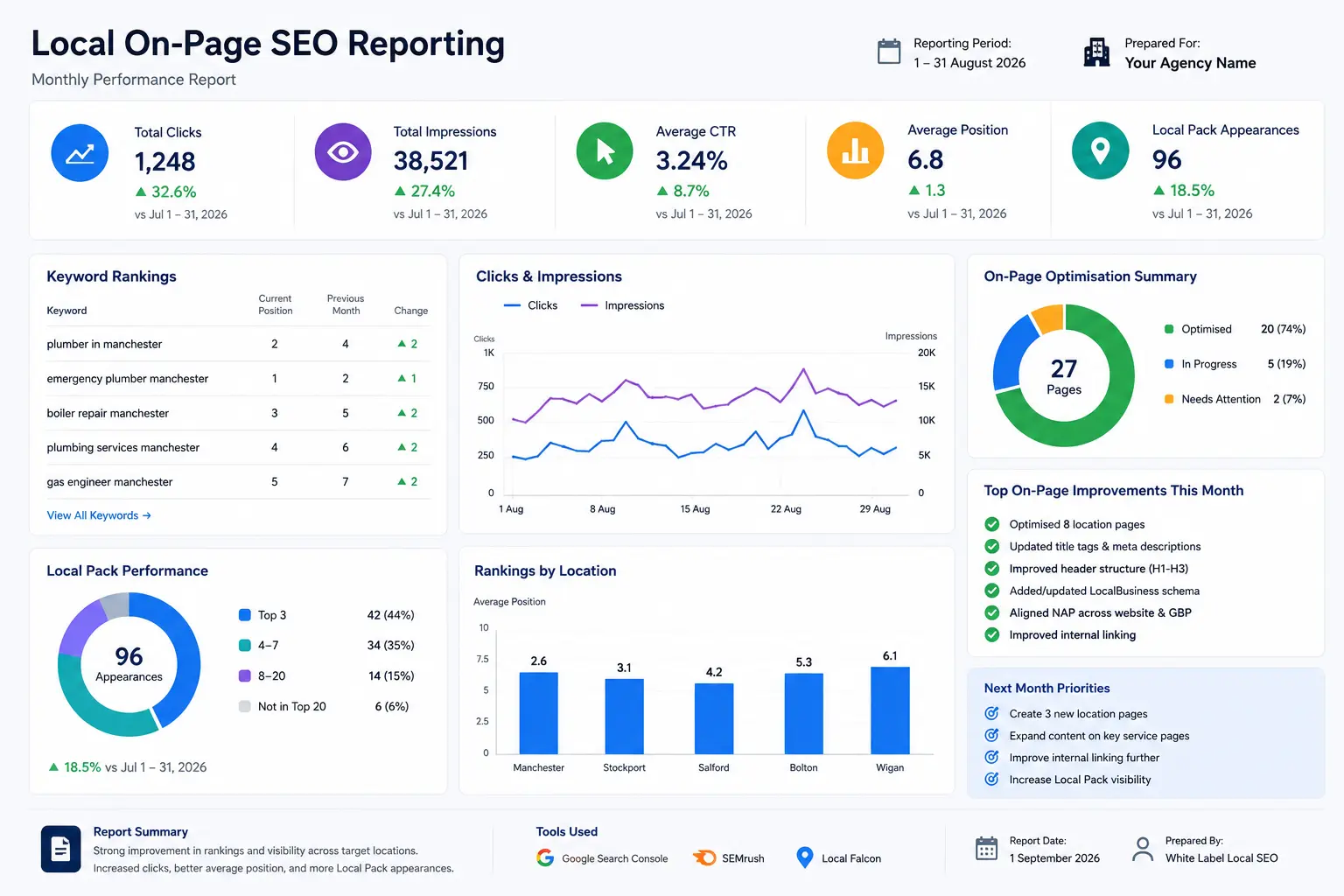
We build reports for your agency to review before your client ever sees them.
- Local pages worked on that month, with a summary of changes
- Local keyword rankings, tracked with Semrush and Local Falcon
- NAP and GBP alignment status
- Indexation and crawl status from Google Search Console
- Priorities for next month
- LocalBusiness schema accuracy
- Internal linking between location and service pages
Frequently Asked Questions
Ready to add local on-page SEO to your services?
Tell us about your agency, your client’s website,
and the locations they serve. We’ll return a plan
covering keyword mapping, header and footer alignment,
GBP alignment, and local schema, priced to fit your scope.